Transcript
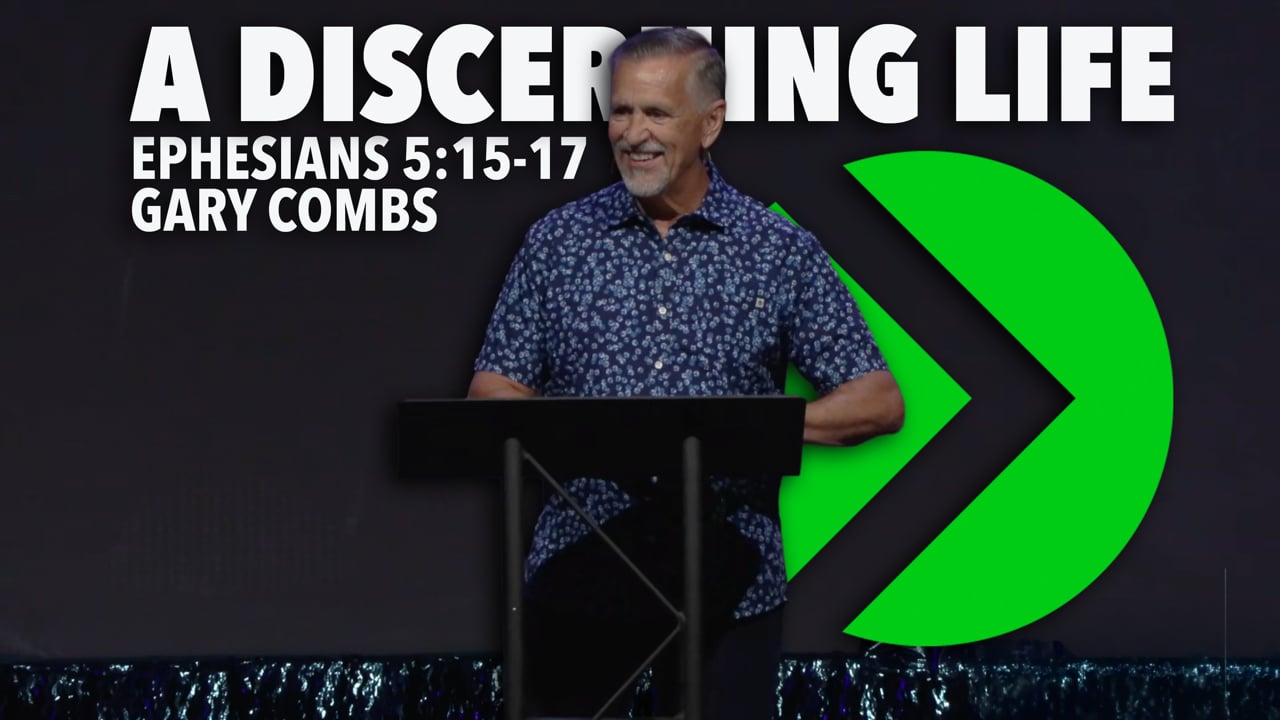
I’m Pastor Gary Combs.
Thank you, thank you, thank you, thank you. What better place to be on your birthday, right?
I’m glad to be here today, and I’m thankful to our teaching team that for the last 5 Sundays have done such a wonderful job on this series, “Built Different.”
And thankful for that team. And I think they all did just a wonderful job. And I hope that I can finish up this series as well as they’ve delivered it up till now. And we’re thankful for that. And you might be thinking, did they decorate for my birthday?
No, they did not decorate for my birthday. This is for KidzFest. And if it’s your first time here, you’re like, what a strange church. We love kids. And we recognize that young people have the most receptive, sensitive hearts to the gospel.
And so we don’t want to waste the opportunity to reach out to young people. And so our church gets really fired up and works really hard to reach young people. And so we make no apologies about that. And so we just go crazy for KidzFest every year in order to reach our kids.
Our series has been based on the book of Romans chapter 12 and the first couple of verses. And what we’ve kind of done is we’ve taken a portion of those 2 verses and let that be the theme of that sermon each week.
All right. And so from the book of Romans chapter 12, we’ve taken a phrase each week and unpacked it by looking at other places in the Scripture in order to enlarge that thought. And so it’s left to me to deal with the last phrase. So let me read it to you, and then we’ll focus on that last phrase. Romans 12:1-2 (ESV) 1 “I appeal to you therefore, brothers, by the mercies of God, to present your bodies as a living sacrifice, holy and acceptable to God, which is your spiritual worship
. 2 Do not be conformed to this world, but be transformed by the renewal of your mind, (And here’s the phrase that we’ll focus on this week,) that by testing you may discern what is the will of God, what is good and acceptable and perfect.” And so the result clause here for these 2 verses, 12 “Therefore, I urge you, brothers and sisters, in view of God’s mercy, to offer your bodies as a living sacrifice, holy and pleasing to God—this is your true and proper worship. 2 Do not conform to the pattern of this world, but be transformed by the renewing of your mind. Then you will be able to test and approve what God’s will is—his good, pleasing and perfect will.” Allowing yourself to be transformed and renewed in mind, now let us have a discerning life. Let’s have a discerning mind that knows and follows the will of God. So today’s message is, “A Discerning Life.”
That’s where we’ll be focusing today. The dictionary says discernment is: discrimination, acuteness of judgment, and understanding. It’s the idea of having wisdom to know what’s good and what’s better and what’s best. Dr. Charles Stanley said this. He said, “Spiritual discernment is the ability to see life from a godly vantage point.
It helps us navigate decisions with confidence. Through His Spirit, we can better distinguish between right and wrong, good and best, truth and error.” It helps us navigate decisions with confidence. Through his Spirit, we can better distinguish between right and wrong, good and best, truth and error. That’s a really good definition of biblical Christian discernment. It’s really the idea not only of knowing good from bad, good from evil, but even more than that, to know good and better and best, to be able to discern what is the very best that God has for you. Now we all face decisions in life that Scripture doesn’t explicitly answer, and we have in Scripture all that we need to have the will of God given to us.
And a lot of people, they’re searching for God’s will when they’re already not obeying what he already said. I would start with what he already said if you’re trying to figure out what God’s will for your life is. But there are questions that we deal with every day that we really need discernment, the idea of being able to take God’s Word and to have God’s Spirit living in us so that we know how to discern. Can I give you a couple examples? One is, whom should I marry?
Do I look this up in the Bible? Can I find her picture there somewhere? No, but you have guidelines. 2 Corinthians 6:14, “do not be unequally yoked with an unbeliever.” So, no missionary dating.
You’re supposed to marry someone who believes that you share Christ together. That’s a good guideline. Proverbs 31 points out some great qualifications for a godly wife, and there are other great examples of what a godly man and husband looks like. There’s a lot of instruction about principles, but is he the right one?
You need discernment. You need Godly discernment. And so you’ve got God’s Word, God’s knowledge, but you need discernment to apply it. . There are other kinds of questions like that; should I take this job?
I’ve got this job offer; should I take this job? Should I speak up or should I be quiet? Usually the answer is you should zip it. I think 9 out of 10 times, you probably should be quiet.
But there are times you’re supposed to speak up. God, tell me – when should I speak up? Should I say yes or no to this opportunity? And our young people today actually have something that makes them afraid to say yes to anything or make a decision about anything, and it’s called FOMO – the fear of missing out. And so then they’re afraid to say yes or no to anything because they might miss something — because if you say yes to this, then you’re automatically saying no to that. I better not say yes to anything, so now I’m doing nothing.
And so that’s not good. That’s fear of missing out. That’s living your life based on fear, not discernment. Should I make this purchase? Should I buy this car?
Should I buy this house?
Discernment. Why am I going through this trouble? Why am I going through this trial?
Have I sinned? Have I made a wrong turn and that’s why I’m suffering? Or is this suffering something that God’s taken me through for my sanctification? Do I need to be corrected here? These are complex things that deserve our consideration, and we need the Holy Spirit’s discernment to help us.
As we look at this world full of competing voices, we desperately need more than just information. We need wisdom. We need discernment. We need spiritual discernment. And now Paul is going to show us what a life shaped by this renewed mind looks like, what this discerning life looks like.
In the Apostle Paul’s letter to the Ephesians, he urged believers in that day and in this day of when the days are evil to live with spiritual discernment regarding the will of the Lord. And I believe that we can live with spiritual discernment and know God’s will for our lives. And as we look at the text, I think it reveals 3 marks for living with spiritual discernment. So let’s look. We’re going to be just looking at 3 little verses today that are just power-packed with these 3 marks of what it looks like to live by spiritual discernment.
Ephesians 5:15-17 (ESV) 15 “Look carefully then how you walk, not as unwise but as wise, 16 making the best use of the time, because the days are evil. 17 Therefore do not be foolish, but understand what the will of the Lord is.” This is God’s word, Amen. I like taking on 3 verses like this.
There’s so much we can say about these 3 verses. It’s just so full, and so I’m excited about it today. Let’s look at verse 15 first. We’ll look at that first verse. And we’ll look for the first mark, which is this:
1. Watching your walk.
Watching your walk. Look at the text again. Look what Paul says in verse 15, “Look carefully then how you walk, not as unwise but as wise,” This is not just a warning sign that says watch your step.
It’s more than that. I remember on a trip to London some years ago, we were riding on the subway and you would hear this sound every time the doors would open on a subway car. It would be – “mind the gap.” “Mind the gap,” because there’s just a little gap right there between the sidewalk and stepping onto the subway train. “Mind the gap;” watch your step, right? But, it is more than that.
What’s this idea of “walk?” It’s something Paul’s been talking about all throughout the book of Ephesians. The cool thing about the book of Ephesians, and this is Paul’s practice in nearly all of his letters, is he starts off with propositional truth, he gives you doctrinal truth, and then he gives you a prescription on how to live it out. And so if you look at the book of Ephesians, it’s evenly divided: 3 chapters of propositional doctrinal truth and 3 chapters of prescriptive truth. He writes you an Rx right there for the last 3 chapters.
Okay, here’s how you do it. But he introduces this idea of “walk” back in chapter 2, early on, and he carries this out. And so then as we look at verse 15, we could almost see that in these 3 verses, he’s given us a summary of what he’s been talking about so far about the Christian walk. How do you see it’s a summary, Gary? Well, “look carefully then.”
That word, “then,” could have been look carefully, therefore, or you could move it to the front of the line, therefore, look carefully how you walk. And so that’s a mark in the Greek text that says he’s summarizing something or he’s told us something that equals this thing, okay? “Look carefully then how you walk.” How long has he been talking about it? Since chapter 2, verse 1, where he talked about how we used to walk
before Christ. He says in chapter 2 early on that we used to walk according to the course of this world. We used to walk the way the world did. We used to walk according to the course of the world. That’s how we used to walk. And then he says, as he gets later into chapter 2, he actually talks about how we came to Christ and how we got saved and how it had nothing to do with us, but it had to do with putting our faith in what he said.
And he says, in chapter 2, verses 8 and 9, “For by grace you have been saved through faith. And this is not your own doing; it is the gift of God, 9 not a result of works, so that no one may boast.” And then he says in verse 10, that’s the verse we often leave out, we forget to say that one. 10 “For we are his workmanship, created in Christ Jesus for good works, which God prepared beforehand, that we should walk in them.” So we’re to walk out these good works, not earning salvation, but as a result of salvation.
And so he says we’re to walk out good works. Then he says in chapter 4, verse 1, he says to walk worthy of your calling.
Then when he gets to chapter 4, verse 17, he says that we need to walk differently than the pagans or the world. Our walk should look different. In verse 2 of chapter 5, he says, walk in love. And then in verse 8, he says, walk as children of light. And now he summarizes, he says that you should walk carefully.
You should keep your eyes on your step; keep your eyes on your walk. Now when he uses the word walk, he’s using a well-known Hebrew idiom that we see in the Old Testament and the New Testament. He’s not literally talking about this, but he’s talking about your conduct of life. He’s talking about how you live your life, and, and he’s given you all these word pictures, but now he’s summarizing. He says that you should walk carefully, you should watch where you walk.
He says to look, and it’s in the Greek imperative. It’s the idea of to look carefully; to live an examined life, that you should be aware of what you’re doing, not just blindly going through life, not just going through the motions. Have you ever said, “I’m just going through the motions.”
No, but to live with purpose and clarity, to look. The word look that’s in the Greek here could be translated to see with the mind’s eye or to discern. To clearly have the power of knowing where you’re walking. And then he says, look carefully then how you walk, not as unwise but as wise. You’re to walk with discernment and with wisdom.
Wisdom, if you think about it, it’s not how intelligent you are. Intelligence might have to do with how much knowledge you’ve attained. Have you ever heard someone say, ‘Well, he had book knowledge but no common sense.’ Have you heard that? They knew a lot of facts, they just didn’t know how to apply them.
And so wisdom is knowledge plus experience. And the experience could be your experience, which usually means you went through “the school of hard knocks” and you made a lot of mistakes; you know what not to do. And as a result of knowing what not to do, now you know what to do. Except for some of us who just keep beating our head against the wall and doing what we shouldn’t do.
Or it doesn’t have to be self-experience. It could be you read God’s Word, which gives you knowledge, but it also gives you the experience of others, and you can see how it worked out for them based on whether they followed God’s will. You can see that. You can see what’s going on there. So you can learn from the experience of others through God’s Word.
You can also learn from the experience of others and your fellow believers through wise counsel. So walk carefully, looking carefully where you walk, not as unwise but as wise. Now notice what Paul doesn’t say. He doesn’t say watch everyone else’s walk. Look carefully how everybody else is walking.
No, he doesn’t say that. He says, look carefully at how you walk, not how other people— we’re already pretty good at looking at how other people live. Oh, I don’t think she should have worn that to church. What was she thinking? Right?
I cannot believe he said that. You know, we’re good at watching other people’s walks. I wouldn’t have done that. Can you believe the way they let that little one talk back to them? I would have given that child a spanking.
But no, that’s not the way they do things today.
We’re good at watching other people’s walk, not so good at watching our own. Proverbs 4:26-27 (NIV) “Give careful thought to the paths for your feet and be steadfast in all your ways. Do not turn to the right or the left; keep your foot from evil.” Look where you’re walking.
Watch your walk. This is not just self-examination by your own reasoning, however. This wisdom we’re talking about is from God. James tells us how we can get this wisdom. He says, James 1:5 (ESV) “If any of you lacks wisdom, let him ask God, who gives generously to all without reproach, and it will be given him.”
When’s the last time you asked God to be involved in your decision-making and how you’re living? God, should we buy this? Should we do this? Is this what you want for us? To just really invite him in so that we pray without ceasing and that we’re continually asking God to give us wisdom about how to discern what’s going on in our lives and looking at our lives. And when we’re talking about this idea of living an examined life, so that we’re aware of how we’re living.
I can’t think of a better prayer than to pray the prayer of David in Psalm 139. Psalm 139:23-24 (ESV) “Search me, O God, and know my heart! Try me and know my thoughts! And see if there be any grievous way in me, and lead me in the way everlasting!” In other words, if there’s anything in me, God, that grieves you, doesn’t please you, expose it to me so I’ll know.
“…and lead me in the way everlasting.” You just kind of think about that prayer. If you prayed that like daily, your accounts wouldn’t get so big. The accounts wouldn’t get so big that it would take a long time to pray about. If you prayed every day, you would only have a shorter list.
And so what if you started every morning by just doing something like this? And sometimes I like to do physical things to align my thinking so it doesn’t wander. And so sometimes before I get out of the bed in the morning, before I put my feet on the floor, I cup my hands down like 2 cups and say, God, this is what happened yesterday, and this is a relationship that I’m praying about, and Lord, search me and know me… Pray yourself empty, and then, and then say, Lord, now direct my path today in the way everlasting and fill me up afresh with your Holy Spirit. Something like that; before you get your feet out of the bed and start heading into your day with you in charge.
Because every day you have an opportunity when you get out of the bed. Who’s in charge today, me or the Lord? I want to live my life discerning with a renewed mind and the Holy Spirit guiding me. This idea that the Apostle Paul’s giving, this idea of walking and looking carefully and watching where you walk and choosing right paths and walking with discernment reminds me of walking on a mountain trail. I grew up in the mountains, the Appalachian Mountains.
I grew up in the Bristol area and there was this place called Abrams Falls that was kind of a secret. It wasn’t like a park, it was on private land. But the farmer who owned it never cleared it. You couldn’t really farm it because the mountains were so steep and the cliffs, and then this huge fall that went over that you could walk behind the falls and stand behind it, and this water would go over you. It’s just the coolest place, but it was dangerous to get there because the path was really narrow. You couldn’t walk 2 abreast.
You had to walk in single file, and there were places where you stepped where the trail would give away and you would be going down the mountain, which you didn’t want to go. And then there was this other thing going on there. It was infested with copperheads. There were snakes. You could step on something that moved because the rock rolled or something that moved because it was alive.
As a teen, we used to go there so much. I took my 3 kids there when they were young, and my little brother led the path. And he was a police officer. He was unafraid. He was an amazing strong man, but he did not like snakes.
And he apparently stepped on one, and he was leading the path, and instead of turning and saying to the rest of his family, there’s a copperhead, he jumped about that high and took off running. And so I’ve got 3 kids here now with a copperhead. And anyway, we lived to tell the tale. But let me say to you, you didn’t walk looking at the sights.
You kept your eyes on the path — and you looked closely at how you walked.
And so we’re called to live an examined life, a reflective life and asking the Spirit to help us. Socrates famously said, “The unexamined life is not worth living.” He also said, “Know thyself.” This is good advice from a Greek philosopher, but Paul urges something better, something deeper. He says, examine your walk not by your own reasoning, but with God’s wisdom.
To examine your walk with His help, with God’s help. “Search me, O God, and know me.” He’s not just calling for “navel-gazing.” He’s not just calling for introspection. He’s called for an examined life by the wisdom of God.
To look into the mirror of God’s word, as James calls it. He says that God’s word is like a mirror, looking into it and seeing what reflects back about you. Are you watching your walk? What habits are forming in your heart? What influences are directing your decisions?
The discerning life begins with a humble willingness to look carefully and humbly, to lead an examined life. And that leads us to the second mark:
2. Redeeming your time.
Making the best use; it’s a dynamic translation. It’s a good interpretation of the text. The Greek text literally uses a marketplace word which means to buy back or to buy out of or to redeem. As the King James version translates it nearly literally at this point, to redeem. To make the best use of, to buy back the time. And so, if you think about what time is, time and money, the way you get money, which is just a paper symbol or a coin, it’s just a symbol of how you have spent your time and your effort.
That’s what money is. Money is a symbol of— it’s an intangible thing, but it’s based on how you spend effort over time, right? And so if somebody thinks it was worth it, they give you in exchange this symbolic gesture, which now you can exercise to get somebody else to spend their effort and time to give you something. And so the idea of buying back your time seems very accurate. In fact, we use this kind of language in the English language all the time.
How did you spend your time? Don’t waste your time, right? We use this kind of thinking on time, redeeming your time. So looking at the time, here’s the one place that we’re all equal 24/7. You can say he’s got more money, less money, he’s got more talent, less talent, he’s stronger, she’s prettier.
You can say we got all these different gifts, but when it comes to time, each day we have the same amount. How do you redeem it? How do you spend it? How do you make the best use of it? And this is about discernment.
How do you spend your time? Now this word time, it could have been one of two words in the Greek. Greek’s a very accurate language. It could have been “chronos.” “Chronos” is like tick, tick, tick, like your watch.
But that’s not it. That’s not the word. That would have been time. It would have been translated time. The word here is “kairos,” which is more like opportune time.
More like the right season, the right opportunity. He says to redeem your “kairos” time. It’s a decisive moment. It’s an open door that will only be open for a season. It’s an opportunity that will pass if you don’t discern it and see it and act on it.
And so he says to make the best use of your opportunities. How to make the best use of every opportunity. Some people say, well, that was a coincidence, but I don’t believe in coincidence.
I believe in a sovereign God. I believe in “God-incidence.” And I also believe that God is constantly placing opportunities in front of his people for us to walk in them. I believe that God’s working in advance of us, and our role really is to look for where he’s already at work so we might join him there. So that we’re to look for these “kairos” moments, especially in the life of other people.
Life is so short. Don’t waste those opportunities. Don’t waste your life. Spend your life, spend your time with God’s wisdom. Psalm 90 says, Psalm 90:12 (ESV) “So teach us to number our days that we may get a heart of wisdom.”
Number our days. Count your days so that you can get a heart of wisdom. What a perfect verse for my birthday.
Right now, I don’t need to count what I’ve already done because I already spent those. Can’t do anything with those. I can give them to God and say, God, thank you for those, but going forward, whatever you give me, I want to discern the “kairos” opportunities, the moments that you want me to do what you purpose for me to do. I want to live redeeming the time. And I think, young people, as you get older, you become more aware of this.
You become more aware of, I wonder how many more of these I have. If you see your parents once a year because they live out of state and they’re already in their 70s or late 60s or something like that, you might see them 5 to 10 more times before they graduate to heaven. You start counting, you start counting those kinds of things. My mother used to call me, and she’s been with the Lord now since 2001, and I still miss her when I think about her and her voice and her place in my life.
But she used to call me; I was a young man, and I was so impatient. And she would call me and she’d say, ‘Hey, Gary Wayne, I love you, and we haven’t talked since… You haven’t called me.’ And I’d always feel guilty. But, I’m thinking, why are you calling me right now?
I was doing something. But okay, it’s my mom, I’m talking to her. And she’d say, ‘Well, your granny said this to tell you she loved you too, and oh, she’s not feeling good lately, you know, she’s got that thing.’ She would start telling me about that physical thing, and then she’d start telling me about my Aunt Betty, and then it’d be about my Aunt Betty’s son, and then it would be— then she’d be 3 generations over here somewhere, and I didn’t know who she’s talking about. But she would give me a complete report on everybody’s health and who was doing what with who and what was happening.
And I’m just thinking that I had things to do, Mom. But I wouldn’t say that to her. She’s my mom. And then the Lord took her home. And I remember the first few months that I would pick up the phone and dial 703-446-2819, and she didn’t answer.
And I just wanted to hear her tell me about Granny and Aunt Betty, and about…I just wanted to hear her tell me all of that. There’s only a few times, there’s a finite number of times that that happens.
And it’s wise to think about that. Not to be depressed, not to cry about it, but to take every opportunity and redeem it.
That’s what he says about redeeming the time. And then he gets really specific when he’s writing to the church at Colossae. In Colossians 4:5 (ESV) he says, “Walk in wisdom toward outsiders, making the best use of the time.”
He’s talking about the walk, about this lifestyle of conduct. Making the best use of the time. It’s that same turn of phrase.
It’s still redeeming the time. And he says that when you’re with people that are outside the faith, don’t waste it, because that’s why you’re still here. That’s why He hasn’t brought you home already. He is still expecting you to live out His purpose to declare the glory of God and the grace through Jesus Christ alone.
That’s why you’re still here. So when you’re with lost members of the family, lost people in your neighborhood, lost people at work, people that are far from God at the school, in your classroom. Don’t waste it.
Be careful about how you walk in front of them, because you are Christ’s ambassador to them. Whatever they know about Christ, they’re learning it from you.
Redeem the time.
A farmer understands this “kairos” time. He recognizes there’s a small window that he has to plant the crops and get it in the ground in order to bring a harvest. I found this chart. You’re not going to like it. I don’t like it.
I’m going to show it to you anyway. It’s called, “A Human Life in Numbers.” It says that the worldwide average life expectancy is 71. In my study group this week, I was told, “Well, looks like you have three more years, Dad.”
Make the best of it. Like, I need to, I need to bear down. 71, okay. Do you know that you spend the first 24 years of this, the largest portion of your life, sleeping? 24 years of your life.
If you live to 71, you spend 24 years sleeping. If you live to 71, and this is a new phenomenon, this is a modern phenomenon, you spend 13.3 years looking at a screen.
Some of you are looking at reels right now and still listening to me.
13 years of your life you are looking at a screen. We’re launching a new series next week called, “Connected.” We’re going to talk a little bit about that. I’ll save that. Next on the chart is being sick for almost 12 years.
I think a lot of that, you sort of racked that up at the end, but some of us have gotten it along the way. Working is on the chart for 10 years. Commuting, just being in a vehicle traveling somewhere, is 4 years. Eating is 3 years. That’s not so bad.
3 years of just munching. School is right at 2 years. You say, well, I went to school for 16 years. No, you didn’t. That was just a few hours per day.
You add it up, it comes out to about 2 years. That leaves you about 2 years to do what you wanted to. About 2 years to do it.
I’ve been at the deathbed of people in the hospital many times. I’ve been a pastor for 34, almost 35 years now. I’ve never heard anybody say, ‘I wish I would have answered more emails.’
‘I wish I would have watched more reels.’ I have heard people say, ‘I wish I’d spent more time with my family. I wish I’d told more people about Jesus.’ I’ve heard that.
I’m a pastor, so I don’t play around when somebody’s been told to call the family in.
I ask them, ‘John, is there any unfinished business with anybody? Anybody in your life right now? Anybody you’re sideways with that you just want to get that straight before Jesus calls you home?’ And I’ve had people say, ‘Yeah, I need— can you help me get such-and-such in here?’ People just start thinking about the stuff that we probably should have been thinking about our whole life.
There’s wisdom in numbering your days. C.T. Studd said this famous statement: “Only one life, ’twill soon be past; only what’s done for Christ will last.” I think that’s true. Instead of asking, what do I need to get done today,
ask, Lord, what opportunities, what divine appointments have you put in my path today? Give me the discernment to see it. So don’t merely count your days, make your days for Christ count. And this leads us to our 3rd mark:
3. Understanding the Lord’s will.
Watch your walk, redeem your time, understand the Lord’s will. Paul gets to the goal in verse 17,
”Therefore do not be foolish, but understand what the will of the Lord is.” Therefore do not be foolish. That’s the opposite of wisdom. Don’t be foolish. Watch your walk, redeem your time. This word, “understand,” literally has the idea of putting it together like a puzzle.
Take God’s word, pray for the Holy Spirit to give you wisdom, and help him to piece the puzzle together so that you walk in wisdom. And we can do this. We can know the will of the Lord. I have young people often come to me and say, can you pray for me? I just want to know God’s will.
And it’s usually one of those top decisions, you know, like, is she the right one? Is he the right one? Is this the school? Is this the major I should major in? And once again, I would say, as I did at the opening, those are discernment questions, that we have God’s word to give us knowledge and to shape our way of thinking, but then we have the Holy Spirit living within us to give us discernment in order to choose not only what’s good, but what’s better and even what’s best.
And then having discerned it— this is the challenge— then by the power of the Holy Spirit to obey it, to actually do it. Here’s what Paul writes to the church at Corinth about this. He says, 1 Corinthians 2:14-16 (ESV) “The natural person does not accept the things of the Spirit of God, for they are folly to him, and he is not able to understand them because they are spiritually discerned. The spiritual person judges all things, but is himself to be judged by no one. “For who has understood the mind of the Lord so as to instruct him?” But we have the mind of Christ.” The natural person does not accept the things of the Spirit of God, for they are folly to him and he is not able to understand them because they are spiritually discerned. So who’s the natural person? That’s the person without Christ.
That’s an unbeliever. That’s someone without Christ. They can’t understand God’s word. They can’t understand this. They follow a different way of thinking.
But then he says, “The spiritual person judges all things, but is himself to be judged by no one.” Why? Because there’s no condemnation for those who are in Christ Jesus. And so you can have the mind of Christ. And then he quotes from the Old Testament rhetorically here.
He says, “For who has understood the mind of the Lord so as to instruct him?” Nobody can understand the mind of the Lord. We can’t tell him what to do. Well, that’s true. You can’t tell him what to do.
But can you know his mind? Paul concludes, “But we have the mind of Christ.” Did you know that? That when you have the Spirit of Christ living in you, You have the mind of Christ available to you to discern what’s good, better, best.
Right? Isn’t that amazing? That you have him walking with you and helping you to make these decisions. Which is why I think the next verse— and we stopped at 17, but Paul didn’t stop at 17. He goes on to verse 18, and he says this, Ephesians 5:18, Ephesians 5:18 (ESV) “And do not get drunk with wine, for that is debauchery, but be filled with the Spirit.”
If we say be filled with the Spirit, we’re not talking about a cup that you used it all up and now it’s empty and you need to get more of it. That’s not the metaphor. The metaphor is instead of being under the influence of alcohol— he’s using that metaphor, isn’t he— to be under the influence of the Holy Spirit. That’s the metaphor. That’s the right understanding.
And so instead of being filled with some chemical or some fleshly or some other kind of outward influence or even your former old life influence, be filled with the influence of the Holy Spirit. Be filled with Scripture because you’ve put it in there by reading it, hearing it preached, hearing it studied, being in a small group and being everywhere you can to get God’s Word in you. Rewriting the hard drive — so your way of thinking is new. You’ve got a transformed, renewed mind because you’ve given your life to Christ. And then you’ve got the mind of Christ living in you by the Holy Spirit so that you can pray without ceasing and talk to him about what you’re doing moment by moment.
And so you can live a discerning life, a life of wisdom. It’s a wonderful thing. Understanding God’s will is not the achievement of the strong-willed. It’s the fruit of the Spirit-filled life. It’s the final mark that drives us back to grace.
Saturate yourself with God’s Word where his will is revealed. Pray that God would fill you with the knowledge of his will, and then bring specifics to him and say, how would you like me to do this, Lord? And then if you’re in the moment and somebody that you’re just talking to— maybe it’s a friend, maybe somebody you’re just meeting and you ask, “How are you doing?” And they say, “Fine,” But because the Lord’s living in you and he’s given you the mind of Christ, He says to you that that person’s not fine.
And then you ask, “How are you really?” And boom, they break down. You start living an adventure because you have the mind of Christ to discern what’s going on around you, what’s going on inside of other people, and you begin to live as Christ called you to. We’ve seen 3 marks of the discerning life this morning: watch your walk, redeem your time, understand the Lord’s will. But may I say to you, there’s really only one person who ever lived it perfectly.
Think of it— that’s Jesus. So as you’re leaving here, these 3 marks are not 3 steps or 3 rungs on a ladder that you need to go work at. They’re a gift to receive. There are 3 marks that could be your life allowing the Lord to do it. Because look at how the Lord Jesus lived.
He watched his walk with perfect care. He said in John 8:29, ”I always do the things that are pleasing to him.”
I always do the things that are pleasing to the Father. He never grieved the Father. He lived perfectly. He walked perfectly.
He redeemed every moment of his time. It says in John 9:4, “We must work the works of him who sent me while it is day; night is coming, when no one can work.” He always knew what time it was. His brothers said, you should go up to Jerusalem with us.
And he said to them that any time is good enough for you. But he’s living according to the Father’s timing. When his mother Mary said they’ve run out of wine at the wedding, he tells her, “Mother, it’s not yet my time.” But, because he was submissive to his mother, he performed his first miracle in the book of John. He always had this sense of “kairos,” timing.
He always did it at the time in God’s timing. And then when it came to knowing and obeying the will of the Father completely, He’s the one in the garden on the night before his crucifixion who said, Luke 22:42, “Not my will, but yours, be done.” So he stretched out his arms and he said yes to the Father’s will. No one’s ever lived like that. No one ever is able to live like that but Jesus.
But that’s where the gospel lands. That’s where the good news lands, is having heard about these 3 marks, The Spirit of Christ lives in us when we invite him to take our lives. He comes, and when the Father looks at us, when he looks at me and he looks at you, he sees Christ in us, and he sees a life lived perfectly. And so his righteousness is credited to my account and to your account. And so when we live a life of discernment, it’s really Christ in us living out through us.
That’s the gospel. The examined life is not like these rungs in a ladder that we climb. The discerning life is more like surrender to the Holy Spirit and to the Spirit of Christ in us. For 6 weeks, we’ve traced what a life on Christ is built like, and we’ve said it’s a surrendered life, it’s a sacrificial life, a worship-filled life, a countercultural life, a transformed life. And now we see that it leads to a discerning life so that we can know and live according to the will of God.
We can live wisely and we can live a discerning life in Christ because of Jesus. Let’s pray. Lord, I just lift up, first of all, that person that’s here today and you’ve never given your life to Jesus, you’ve never turned your life over. You’ve never said as an act of the will, I give you charge of my life. I recognize what you’ve done, Jesus, that you died on the cross for my sins, that I’m a sinner and I repent of that. And I believe that the Father raised you from the grave on the 3rd day. I believe that.
Come and live in me by your Spirit. Forgive me of my sin. Adopt me into your family. I want to be a child of God. I want to follow you.
Come and live in me by your Spirit so that I know how to live. If that’s you, my friend, you, you can pray that prayer right in your seat. It’s not so much the words of your mouth as it is the attitude of your heart, that you’re placing your faith in Jesus, surrendering your life to him. And if you’re doing that right now, he’ll save you.
It’ll change everything. Others are here today and you’re, you’re a follower of Jesus, but you’ve been making some decisions on your own lately. You know, you know what I’m talking about. You say, Lord, thank you that in Jesus I’m forgiven, but Lord, I want to put you back on the throne of my life right now. I want you back in the driver’s seat.
Forgive me for taking these steps without discerning your will. And the great thing is that we can, in Christ, have him redirect our path. Lord, search me and know me. Try me. See if there’s anything in me that’s grievous to You.
Set me on the path of life everlasting. In Jesus’ name, amen.