Transcript
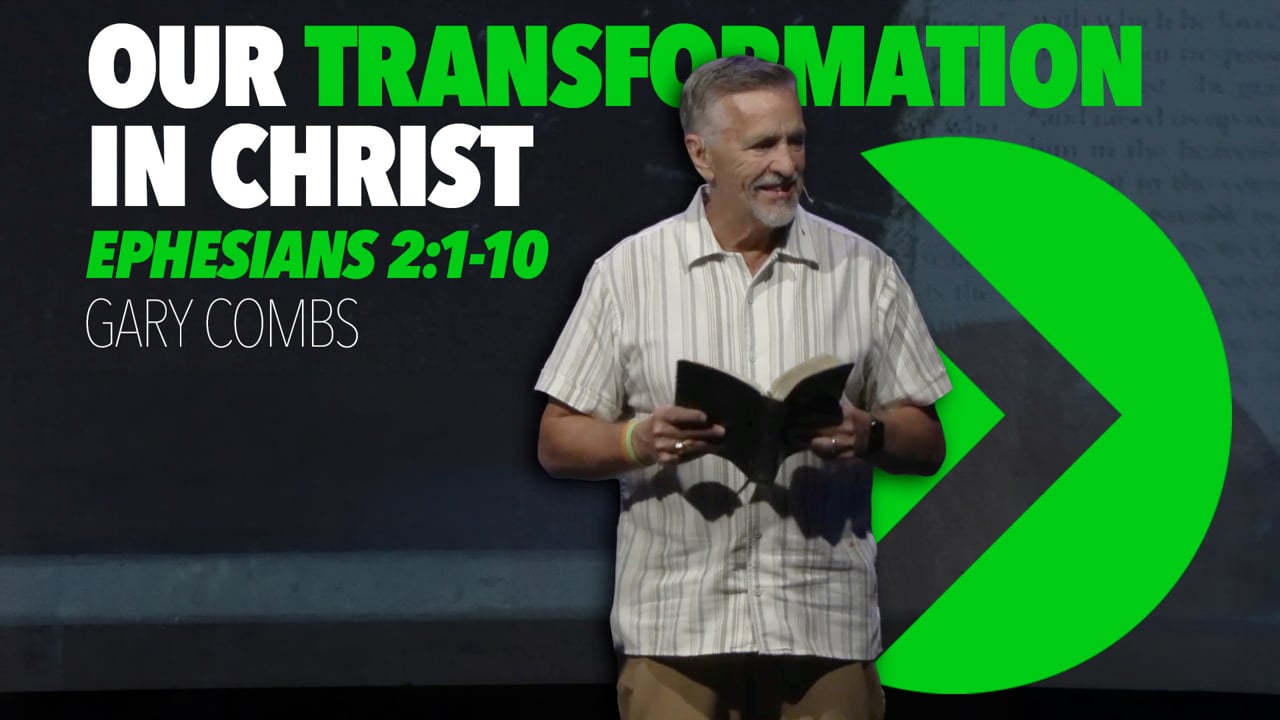
We are in part three of our series through the book of Ephesians. In this series, we’re going to take it in 2 parts. We’re going to do six sermons leading into the holidays, then we’ll take a break for the holidays. Then, in 2027, we’ll come back and get the last three chapters of the book of Ephesians. Paul has organized this in such a way that it just fits naturally for us to do it in two parts. The first three chapters really give us our position in Christ. It gives us propositional truth about who we are and our blessings in Christ and how he prays for us and tells us about our salvation.
So it’s propositional truth for three chapters about our position and our possessions in Christ. And then the back half, the last three chapters are really the prescription. Okay, since we know who we are and what we have, how should we then live? So what are the practices of being a Christ follower?
So that gives you the organization of the book. The key phrase in the book of Ephesians is “in Christ.” It occurs over 36 times in various ways, “in Christ,” “in Him,” “in the Beloved.” But Paul really wants us to get this, that being a Christ follower, being a Christian means that Christ, by His Spirit, lives in you, that He abides in you and you have a new life in Christ. And so that’s the key to understanding.
Christianity’s not a life merely for Christ, it’s not a life merely like Christ, living like Christ, it’s Christ in me, the hope of glory. And so Paul wants us to know this. Now, he’s writing to the believers in a city called Ephesus, and over the last few weeks we’ve been talking about this city. It was one of the four largest cities in the Roman Empire in Paul’s day. It probably had a population around 250,000 people. It’s a huge city, and it was the seat of the proconsul of the Roman Empire for Asia Minor, which is modern-day Turkey, and it was located on the west coast of modern-day Turkey, of Asia Minor. It was a very wealthy city and a very influential city, and it was an important center of Christian influence.
In fact, following Paul, who spent 3 years there planting this church, he knows the city well, knows the people well. Following Paul, according to early church tradition, we find that Timothy became a pastor there. So Timothy, the spiritual son of Paul, of Paul became a pastor of the church at Ephesus later on. And then following him, we know that the Apostle John in the latter days of his life, the last living apostle, was a pastor at the church of Ephesus. And so it’s an influential and important city.
Paul wrote this letter about 61 or 62 AD. He wrote it, we believe, from his first imprisonment when he was under house arrest in Rome. And so Paul’s penning this letter, this really beautiful letter, to the believers at Ephesus from a Roman prison. Over the last couple weeks, we’ve covered the blessings we have in Christ, that we have every spiritual blessing in the heavenly places. Paul opens up with this amazing doxology, that we have every blessing, and then he gives us a prayer he’s praying for us, and he says that I pray that you would have the eyes of your heart enlightened so that you would know these blessings, that it wouldn’t just be head knowledge, but it would be deep in your heart and that you’d really know what you have in Christ.
And that brings us to chapter 2. And he’s going to move from the blessings we have and to be enlightened to know that these blessings belong to us. He’s going to now back up a little bit and tell us how we got here. How did we get this salvation and what’s that look like? He wants to tell us what we have and what happened to us.
Now, most people, as Paul reminds us of this, most people think, well, I’m basically good. I’m basically a good person. And that’s what most Americans think; you know, we’re good people. We’re Americans. I make mistakes. I’m not perfect.
We’ll all admit to that, right? Nobody here says I’m perfect. And if you meet somebody like that, you know they’re lying, right? We all make mistakes.
What we think is that Christianity is where God helps us to become a better version of ourselves. That’s what Christianity is; it’s a self-improvement course. But that’s not what the Bible teaches us. That’s not what the Apostle Paul teaches us here. The Bible describes our condition apart from Christ much more radically. Paul doesn’t say that we’re spiritually sick in need of healing.
He doesn’t say that we’re spiritually weak and need strength. He says we’re spiritually dead apart from Christ and we need resurrection. He says that that is true Christianity. See, the gospel’s not about self-improvement, it’s about resurrection. Christianity’s not about God taking bad people and making them a little better.
It’s about taking spiritually dead people and raising them to life in Christ. And so the Apostle Paul’s letter to the church at Ephesus, as we get into chapter 2, he wants to describe to them how God has transformed them from being dead spiritually to being alive spiritually in Christ. And as we look at the text, I think we’ll see 3 truths that teach us about our transformation in Christ. Let’s dig in. We’re in chapter 2 of the book of Ephesians.
Ephesians 2:1-10 (ESV) 1 “And you were dead in the trespasses and sins 2 in which you once walked, following the course of this world, following the prince of the power of the air, the spirit that is now at work in the sons of disobedience— 3 among whom we all once lived in the passions of our flesh, carrying out the desires of the flesh and the mind, and were by nature children of wrath, like the rest of mankind. 4 But God, being rich in mercy, because of the great love with which he loved us, 5 even when we were dead in our trespasses, made us alive together with Christ—by grace you have been saved— 6 and raised us up with him and seated us with him in the heavenly places in Christ Jesus, 7 so that in the coming ages he might show the immeasurable riches of his grace in kindness toward us in Christ Jesus. 8 For by grace you have been saved through faith. And this is not your own doing; it is the gift of God, 9 not a result of works, so that no one may boast. 10 For we are his workmanship, created in Christ Jesus for good works, which God prepared beforehand, that we should walk in them.”
This is God’s Word. We’re looking for 3 truths about our transformation in Christ. The first truth is this:
1. We are spiritually dead in our sins without Christ.
Without Christ, we are already spiritually dead in our sins. Paul begins with the darkest possible diagnosis. You’ve come in to see Dr. Paul about your spiritual illness, and he says it’s too late, you’re already spiritually dead unless God intervenes.
That’s what he says. Now, if you’ll be reminded for a moment about the book of Genesis and how humanity got where it is today, God said, “Let us make man in our own image, male and female, He made them.” And so He made us as the crown of creation to reflect His glory to His creation. But yet man sinned against God. And so Adam and Eve were given one law to keep and they were taught if you break that, you will die.
On that day, you will die. But the evil one said, ‘you will not surely die.’ And it looked as if the evil one had told them the truth because when they ate of the fruit, they did not immediately die. They were kicked out of the Garden of Eden.
Their lives were changed. They no longer had fellowship with the Lord as they did before. But at that very time, death began to be at work in them. And they were spiritually dead from that moment, separated from God spiritually. Physically, the clock started ticking on their bodies so that there’s a clock ticking even in all of us today.
There is a day coming when these bodies will cease to live. These bodies will not live forever, apart from God raising us from the dead. And so death has been at work in humanity ever since. And so we are spiritually dead. So every one of us is born as children of Adam, spiritually dead.
Thus, Jesus taught Nicodemus in the garden that you must be born again. In what way? Do I need to enter back into my mother’s womb? Nicodemus asked. No,
don’t you understand? You claim to be a teacher in Israel. You don’t understand spiritual things. No, you must be born again of the Spirit. You need to be born anew
in the Spirit. Why? Because we’re all born spiritually dead. This is the news that Paul reminds them. He says, 1 “And you were dead in the trespasses and sins.” Speaking of the believers in Ephesus, you were, past tense, dead in your trespasses and sins.
A trespass is to step on another person’s territory. And in this case, it’s to step outside the boundary of what God has called us to be and how to live. It’s not an accidental trespass, it’s intentional. And then a sin is the idea of missing the mark of God’s highest and best. It’s falling short.
You’re dead in that. That’s how you were. And this is what it looked like, verse 2, “in which you once walked, following the course of this world, following the prince of the power of the air, the spirit that is now at work in the sons of disobedience—” The word, “walked,” is not to be taken literally. It’s a metaphor, a Hebraic phrase that means way of life.
Your former way of life looked like this. This is how you live. You followed the course of the world. In fact, Paul’s about to give us 3 enslaving influences for those of us that are dead in our trespasses and sin. These 3, if you will, a trinity of evil that enslaves us.
The first is the world. Now he doesn’t mean earth, he means the culture, The fallen culture of humanity, the worldly culture that this person just follows whatever the culture’s doing, whatever’s in vogue, whatever’s popular, they’re all in on it.
That is what you used to look like, believers in Ephesus. You followed the course of the world. And then the second member of this threesome is the prince of the power of the air. Who’s that? Well, that’s the evil one.
That’s Satan, who’s been given temporary authority over humanity because humanity rebelled. And he has a spiritual influence. And so we battle not only against the world, but we battle against the evil one who has an enslaving spirit, the spirit that is now at work in the sons of disobedience. Whenever Jesus was preaching in John chapter 8, it says that the Jews got upset at him. The Pharisees got upset at him.
They were rejecting him. And he said, ‘well, you’re children of your father and he was a liar. And so you’re lying. If you knew me, you would know the truth.’. And they said, ‘our father’s Abraham, what are you talking about?’
And he said, ‘I’ll tell you who your father is. Your father’s the devil and you are children of the devil. Because if you were a child of Abraham, you would love me and you would know that I’m of the Father.’ So this is not new, what Paul’s using here to call what we were as sons of disobedience is the same thing Jesus was saying to them. That we’re followers of this evil influence of Satan.
Paul’s not playing. He’s not finished. He has a third member of this unholy trinity, and sadly it’s us, the flesh. Not this so much as the sin nature, the fallen nature. And he begins to describe what that looks like.
He says, in verse 3,
“among whom we all once lived in the passions of our flesh, carrying out the desires of the flesh and the mind, and were by nature children of wrath, like the rest of mankind.”
The word, “desires,” is an interesting Greek word here, “epithumia.” “Epi,” if we say epicenter, we mean it’s over the center. So “epi” in Greek and in English, means over. And “thumia” has the idea of a heated desire. The word, thermos, comes from thumia in the Greek.
It has to do with that which is heated or passionate. It’s not just thumia, it’s epithumia. So you could translate it over-desire. Are desires all wrong, evil? No.
Does God have desires? Yes. Did He give us desires? He did. So when our stomach grumbles, we have a desire for food.
When we feel thirsty, we have a desire for something to drink. He’s given us sensual desires for intimacy. And so those were given to us from God. But the problem we have is in our fallen nature, our sinful nature, is we have an over-desire. So then we overeat, we overdrink, we overindulge, we seek sexual pleasure outside of the covenant of marriage, and then we seek it easily so that we become addicted to pornography and to other forms of fallenness.
We have an over-desire. These are the enemies that Paul says that once assailed us, enslaved us and we were dead in them. But he’s not finished. He’s given us this unholy trinity, the world, the devil, and the flesh. And then he says that hanging over us, he says, in verse 3, “…and were by nature children of wrath, like the rest of mankind.”
This Greek word here is “orgē.” It’s where you get the word “ogre.” It means judgment that’s moved by God’s anger; His appropriate, righteous anger against sin because He’s a holy God. He cannot allow it to continue in His universe that He has created. But so he has, it’s hanging over humanity.
Like a sword of judgment, but He’s holding it back in His grace. And so we’ve become like children of wrath.
Paul says that you were spiritually dead without Christ, and you were enslaved by the world and Satan and the flesh, and you were destined for God’s judgment. That’s where you were. Praise God, that’s where you were before Christ. Paul talks about it further in Romans chapter 3. He says, Romans 3:10-12, 23 (ESV) “As it is written: “None is righteous, no, not one;
no one understands; no one seeks for God. All have turned aside; together they have become worthless; no one does good, not even one.” …for all have sinned and fall short of the glory of God.” Only one, Jesus, was without sin.
We’re all sinners and we’re spiritually dead without Christ. And there’s a wage to being a sinner. The wages of sin is death. And that’s not just spiritual death, which we experience already apart from Christ, but ultimate death, eternity without God.
A dead battery can be recharged. A broken machine can be repaired. A sick person can recover.
But it is absurd to try to give helpful advice to a dead person.
You could do better. No, they’re dead. You could try harder to kick that habit. No, they’re dead.
Why don’t you turn over a new leaf? You’re talking to a dead person, Paul says that we must be careful not to minimize the seriousness of sin. It kills.
Christianity is not behavior modification. Spiritually dead people do not need a motivational speech. They need Jesus.
They need resurrection.
And this also destroys our spiritual pride
when we look at people that are far from God to go, well, I would never do that.
Instead, to recognize that we once walked like that. We were once enslaved. We were once assailed with these over-desires.
No, we’re more like beggars who just happen to know where the breadline is.
Paul says this is our condition without Christ, and then he moves us to a very important transition, one of my favorite two-word transitions in all the Bible. Verse 4, “ButGod…”
But God. Well, he’s arrived now in this story that’s where we were, but God. That leads us to our second Truth:
2. We are made spiritually alive with Christ.
We are made spiritually alive with Christ. Without Christ, we’re already dead. It’s not like we’re going to die, we’re already dead without Christ, but with Christ, we’re made spiritually alive. But God, we were dead, but God acted. Paul doesn’t say try harder; he doesn’t say you should try to figure things out, he says, “But God,” God intervened. Why did he intervene? Well, Paul answers the question.
He says he was rich in mercy.
His mercy overflowed. We were dead and we were in rebellion and we were under his judgment, and he intervened. His love caused him to address his own holiness and his own judgment. And he’s so rich in mercy. It wasn’t just that.
It wasn’t just that he’s a merciful God.
Paul continues to tell us why He intervened. He says, Verse 4, “But God, being rich in mercy, because of the great love with which he loved us,” The great agape love, unconditional love. He loved us when we were unlovable. He didn’t love us because of who we are, He loved us in spite of who we are.
He loved us because, as John writes in his first epistle, “God is
love.” That’s why he did it. That’s why we have “But God” here in verse 4, because he’s rich in mercy, because he is great in love for us. Now, why did he do it? We know why he did it.
It was his mercy, his love. When did he do it? “ While we were dead in our trespasses and sins.” He didn’t say, well, let’s see if they’ll turn and do a little better. Then I’ll intervene. No, we were dead.
That’s when he did it. And so Paul writes in Romans, while we were yet sinners, Christ died for us.
That’s when he did it. And then he piles three actions that God does in a row here, this action that he takes out of his love. He says, “He made us alive together with Christ,” in verse 5. He resurrected us from the dead, spiritual death we’re speaking of here, so that we are born again. He made us alive.
And then, when he says this, he gives us a little parenthetical thought that he’s gonna unload a little bit later in verse 8, but he says, “By grace you’ve been saved.” I’ll tell you more about that in a minute, Paul says, you know, I basically just inserted that right there. And then he gives us the second action, “made alive together with Christ,” in verse 6, “and raised us up with Him.”
And then a third action, “and seated us with Him in the heavenly places in Christ Jesus.” Whatever God has done for Christ, who was crucified for our sins and buried, He raised Him to life, He raised Him up, so He ascended, and He seated Him at the right hand of the Father. And when you’re in Christ and He’s in you, whatever God has done for Christ, He’s done for you. ‘Cause you’re in Christ and He’s in you and you’re in Him.” Christ’s resurrection and exaltation are also yours.
In Christ.
This phrase, this parenthetical phrase, he says, “by grace you have been saved” Grace is God’s unmerited favor. Do you remember the little acronym you’ve been taught through the years? God’s Redemption At Christ’s Expense. That’s grace.
It’s the objective basis for our salvation. It’s God’s free gift of grace that He gave us. Jesus is the object that we can place our faith in. It’s the objective rock basis of our salvation. “For by grace you have been saved,” he says in the ESV.
I like the King James a little better here because it tries to get at this difficulty for the English language at least of a present tense verb and then a sort of past tense with ongoing effect, a kind of verb that’s tagged on with it that is really a kind of -ing word, a participle. So here’s what the King James says, “By grace ye are saved.” So, the “are” is in present tense.
That’s happening right now. I am, you are. And then, “saved,” is past tense. He’s put a present tense with a past tense trying to capture what Paul’s teaching here about salvation and all the activity that happens here.
And the first word that we could get out of this is that we have been saved from sin’s penalty, which is “justification.” You hear these big Christian words sometimes and you wonder what they are, but justification is that you’ve been counted righteous, you’ve been counted just, or as I was taught when I was younger, “just as if I never sinned.” Justification – “just as if I never sinned.” So I’ve been cleansed of sin. So you have been, past tense, saved from sin’s penalty.
That’s inside this verb combo, “by grace, you have been saved from sin’s penalty.” Here’s sanctification. Sanctification means that you’re being made holy, you’re being made like Jesus. We are being saved from sin’s power. We are being saved right now. It’s implied in that participle that we can’t quite see, but it’s there in the original Greek.
And then glorification is we will be saved from sin’s presence. There comes a day when there’ll be no sin. There’ll be a new world and the new heavens and getting a new glorified body.
That’s coming. Amen, right? All right. And so now you’ve learned three big Christian theological words and we’ve simplified it. We have been saved from sin’s penalty.
We are being saved from sin’s power. We will be saved from sin’s presence.
In the book of Colossians, Paul says, Colossians 2:13 (ESV) “And you, who were dead in your trespasses and the uncircumcision of your flesh, God made alive together with him, having forgiven us all our trespasses.”
Baptism is a picture of this.
We see it in Romans 6:4 (ESV) “We were buried therefore with him by baptism into death, in order that, just as Christ was raised from the dead by the glory of the Father, we too might walk in newness of life.”
We’ve been made alive, and baptism is a picture of the old life is buried and dead, and the new life has risen to Christ. Perhaps you remember this name from 2 Samuel chapter 9, “Mephibosheth.” That’s the kind of name that sticks with you.
Mephibosheth, he was the son of Jonathan, King David’s best friend. He was the grandson of King Saul, who became an enemy of David and tried to kill David. And Saul and his friend Jonathan were killed in a battle against the Philistines, and David took over the throne. And when there was peace in the land, he looked around and he remembered his friend Jonathan. He said, ‘is there anyone left from the house of Jonathan that I could show favor, that I could show grace?;
And someone said, ‘well, Mephibosheth is still alive, but he’s crippled.’ Whenever the Philistines overthrew and the land was being attacked when they overthrew King Saul, his nursemaid took off running with him and dropped him and he’s crippled in his feet and in his legs. And David said, ‘bring him to me, bring him to my house.’ And I’m sure Mephibosheth was trembling, thinking, ‘I’m the last survivor from the house of Saul and he’s doing as all Oriental kings did to make sure there were no enemies of the throne left alive.’ That’s not what he did.
He said, ‘here, I want you to take a seat at my table. From now on, you will eat at the king’s table. You will sit, a cripple, at the king’s table and not only that, I’m going to restore to you all of the property, the lands of your grandfather Saul and of your father Jonathan. I’m going to give it all to you, and you get to eat at my table.’ A song that I have enjoyed through the years that I’ve listened to, is written by John Mark McMillan. It’s called, “Carbon Ribs.”
It’s a strange title. You’ll have to check it out sometime. But the chorus is, “Sitting crippled at his table, sitting crippled at his side.” We’re Mephibosheth in this story. That’s who we are.
We’ve been invited even though dead, even though crippled. We’ve been raised up and given all the riches, and we’ve been invited to the King’s table. Some believers think that now that they’re saved, they need to work really hard at making God happy with them, and they try to do it according to their own strength. But our new life comes from God and is sustained by our union with Christ, and his Spirit lives in us. Our identity is no longer about effort and earning, but it’s about being in Christ.
Paul says to be in Christ, to be with Christ. And that leads us to the third truth:
3. We are God’s workmanship in Christ.
We’re at verses 8 through 10. We are God’s workmanship. This is what he’s been up to here. In fact, I skipped over a verse and I need to back up as I get to that. And that was verse 7, because it really leads us into verse 8. It begins with, “So that…”
We see here there’s a purpose clause coming. He’s going to tell us the purpose; God intervened and saved us. What was His purpose? Verse 7, “So that in the coming ages He might show the immeasurable riches of His grace in kindness toward us
in Christ Jesus.” In other words, God says, ‘my purpose for bringing you back to life and raising you up in Christ is “so that throughout the coming ages He might show the immeasurable riches of His grace in kindness toward us.”
Now, we live in a current age and this age will come to an end. In fact, I’ve been telling people about this lately. I’ve been thinking about this a lot lately. Seven years from now will be the year 2033. That’ll be the 2,000-year anniversary of the Great Commission. That’ll be the 2,000-year anniversary of the death, burial, and resurrection of Jesus and the giving of the Great Commission.
So we have seven years to celebrate and to work at sharing the gospel and living for Jesus. I’ve been thinking about that in the coming age, but there’s an age coming after this age. There’s a coming age where God’s going to show off. He’s going to show off. He’s going to show His immeasurable riches toward us in Christ Jesus.
Now, when you’ve seen a sunset in the mountains, when you’ve seen a sunrise at the beach, when you’ve seen a newborn baby in a young mother’s arms, you’ve seen the immeasurable riches of God. You’ve seen glimpses of His glory. And he said, ‘you hadn’t seen anything yet. You haven’t seen anything yet. You, you don’t know what I have coming, that I want to show you what you have in Christ in the coming age.’
And then he says, “for we are his workmanship.” This is awesome. Verse 10, “For we are his workmanship, created in Christ Jesus for good works, which God prepared beforehand, that we should walk in them.” Now he did add something to that parenthetical phrase, “for by grace you’ve been saved.” He added “through faith,” in verse 8.
And so grace is the objective basis, but faith is the subjective means. And so if grace is that Christ died for me even when I was still a sinner, and so grace is this, this is the Bible I’m using, so that’s grace, that’s the object. And so faith then is the means that I take hold of the object. And so it’s, “for by grace you’ve been saved through faith, and that not of yourselves,”because this was given to me, but so was this. I was born with this, weren’t you?
Now I can exercise it, I can build it up, but I can’t make one. I was born with it. It was a gift. And I’m just doing my best to try to “put the cookies on the bottom shelf.”
“For by grace you’ve been saved through faith.” But this, now whatever this is, is not of yourselves, he says. And so this, grammatically speaking, is the “whole enchilada;” the grace, the faith and the salvation. Salvation is not something you can brag about that you did. He did it all, and you received it.
This is not your own doing.
You have nothing to brag about, so that no one may boast except in Jesus, because he did it all, and I’m a recipient.
For we are his workmanship, Workmanship in the Greek, “poiēma,” is the Greek word. If you’re thinking that’s where we got the word, “poem,” you’re right. You in Christ Jesus are His masterpiece, His workmanship, the crown of His creation which He always intended. He said in the very first chapter of the Bible, “let us make man in our own image, male and female He made them.” He put them in authority over all things.
He made us as the crown of creation, but we rebelled against Him. But then He sent Jesus to raise us from the dead and to win back for Himself a people so that that which He had set aside beforehand, before He had created anything, that He had prepared a people that would be created. Oh, that’s a “Genesis” kind of word right there, created. For we are new creations. This is not just a remodel, this is a new creation.
We are His workmanship, a new creation in Christ Jesus, created in Him before time, beforehand. For what? For good works. Well, Gary, you made such a big deal about it not being about works. You weren’t saved by works, but you have been saved for good works. Don’t “get the cart ahead of the horse.”
You can’t earn salvation, but having received it, now you have Christ living in you and you’re to be the light in this world, the salt in this world, that you’re to be different. You’re to reflect the glory of God to this world. And so you begin to look like Jesus and talk like Jesus, and you become His hands and His feet. You become His body, which is the church in this world, created in Christ Jesus for good works, which God prepared beforehand that we should walk. There’s that word walk again, like bookends.
It was back there in verse 1, you used to walk, in trespasses and sin, but He has made it so that you’ve been created to walk, live in Christ, and to live for Him. Titus chapter 3, we read Paul writes, Titus 3:4-7 (ESV) “he saved us, not because of works done by us in righteousness, but according to his own mercy…” He writes again in chapter 2 of Titus, Titus 2:14 (ESV) “[Jesus] who gave himself for us to redeem us from all lawlessness and to purify for himself a people for his own possession who are zealous for good works.” He bought us as a possession for Himself. Jesus, He wants you and He wants to live in you and save you and bring you to life so that you’d be zealous, that you would have a desire, a good desire to do good for Jesus.
I don’t know if you’ve ever visited a museum or an art gallery. If you are looking at paintings, you’ll often look to the plaque to the side to find out more about it,
about the artist and about the painting. It might tell you what year it was painted, and it will tell you what kind of paint and the canvas, but the most important thing it’ll tell you is what? The artist. And if it says “Rembrandt,” if it says “Picasso,” the value goes up because the value is not in the quality of the canvas, it’s not in the type of paint, it’s not in the frame that it hangs in. The value is in the artist. If you go to a bookstore and you’re looking for a book and you’ve got a favorite author because you’ve read one of the books before and you don’t care what the title is, that’s a good writer. And so you look for the book that has the name of the author that you’ve read before and you’ve heard he’s a bestseller.
Paul says, we are God’s workmanship. In Christ, He is the author, He is the artist, He is the one who wrote the poem, that’s you, His masterpiece, that’s what He’s creating in you in Jesus, not you doing it, Him doing it, He’s the author, He’s the creator.
And so we should not ask, what must I do to earn God’s acceptance? That’s the wrong question. Christ has earned your acceptance; receive Christ. What must I do in order to fill up the difference? There is no rest to fill up.
He has fully bought you and paid for you and done all that’s necessary to make you the crown of His creation in Christ Jesus. Instead, a better question might be, well, since You made me, what’s my purpose? And He’s so ready to tell you, and you need to stick around because the book of Ephesians is not finished. God has a plan for your life.
We were once dead in our sins, following the world, the flesh, the devil, and unable to save ourselves, God intervened. Being rich in mercy and great love, He sent His Son to die on a cross in our place and to die for our sins. He was buried, He was raised on the third day, and He ascended to the Father. He’s seated at the right hand of the Father’s throne. And He’s returning again someday. And positionally, Paul says, the Word of God says, we’re already there
experientially. We’re still going through it, but positionally, we’re in Christ. We’re in Christ. So remember who you are. Remember who you were without Christ, and remember who you are with Christ and in Christ. And if you don’t know what I’m talking about today and you’re hearing it now, you’re hearing it clearly, maybe for the first time, I’m going to pray in just a minute, and I pray that you would pray with me and confess Jesus as your Lord.
Admit that you’re a sinner, repent, and believe. Let’s pray.
Lord, thank you that you intervened, that we were dead and you sent Jesus to make us spiritually alive. Lord, I pray for that one today that you’re still dead in your sins. You’re still there.
And I pray right now that the Holy Spirit is moving in your life, that he’s knocking at your heart’s door, that you would open up and say, I want you to come into my life, Jesus. I believe you died on the cross for my sins. I believe that you’ve been raised from the grave and that you live today.
Come and live in me. I turn away from my sins and I turn to you, and I ask you to save me and adopt me into your family. I want to follow you all the days of my life as my Savior and Lord. I commit my life to you today. If you’re praying that prayer, believing, the Bible says if you confess Jesus as Lord and believe in your heart that God raised him from the dead, you will be saved.
Others are here today and you’re a Christ follower, but you haven’t fully embraced what He’s done for you. Oh God, help us deepen it so that we have the eyes of our heart enlightened so that we know that we know that we know that we are Your workmanship created in Christ Jesus unto good works. In Jesus’ Name, Amen.